
The Holy Nights: A Waldorf-Inspired Practice for Grown-Ups
Written by: Sarah Barrett
In Waldorf education, the space between things is often just as important as what we can see. The quiet between lessons. The pause between seasons. The stillness between one year and the next. In this “space between” is when growth, healing, and transformation can happen. Evidence of this is when simply “sleeping on” a new concept or a tough decision can often bring clarity and new understanding. The Holy Nights, observed from December 25 through January 6, are one of these in- between times. Rudolf Steiner taught that the Holy Nights offer a simple, contemplative practice that helps adults gently reflect on the past year and inwardly prepare for the year to come.
You do not need to be an expert in Waldorf education—or spiritual at all—to participate. You only need a willingness to slow down and listen.
What Are the Holy Nights?
According to Steiner, the Holy Nights are a time when outer nature is most quiet, and our inner life can become more receptive. The days are short, the earth is resting, and the usual pace of life softens.
Steiner described this time as especially suited for:
Reflecting on the year that has passed
Allowing insights for the coming year to arise naturally
Working with imagination rather than analysis
Strengthening inner calm and moral intention
Importantly, this is not a goal-setting practice and not a form of therapy. It is closer to watching, listening, and receiving -- trusting in life to give you what you need for the year ahead and opening to it.
The Twofold Rhythm of the Holy Nights
Each night holds two gentle gestures:
1. Looking Back
You reflect on one month of the current year, beginning with January on December 25 and ending with December on January 5.
This is done without judgment. Rather than asking why something happened, you simply observe:
Images
Moments
Moods
Turning points
Steiner encouraged this kind of review as a way of seeing our life from the outside, almost as if watching a quiet film. Picturing it and not analyzing it.
2. Looking Forward
After the backward review, you hold a soft, open question for the same month in the year to come. This is not planning. You are not meant to “figure anything out.” Instead, you might inwardly ask:
What quality of soul wants to grow?
What might this month ask me to receive rather than do?
Often, nothing comes immediately—and that is perfectly right. Steiner said we often see the work of the Holy Nights unfold around Michaelmas (September 29). We are receiving seeds and allowing them to be planted, and we will meet the fruits later.
A Simple Nightly Practice (10 Minutes Is Enough)
You might try this in the evening, after children are asleep.
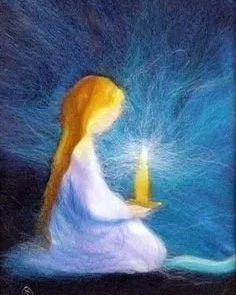
Light a candle.
Sit quietly for a few breaths.
Review the month in images.
Hold one quiet question for the coming month.
Close with gratitude.
If you miss a night, there is no need to catch up. Each night stands complete on its own.
Writing (Very Little Is Best)
In Waldorf pedagogy, less is often more. If you choose to write, write after the practice and use a few words only. Note images, colors, or moods.
For example: “April felt like breathing again. For the coming April: lightness.” Avoid analysis or explanation. The work continues beneath consciousness.
Why This Practice Matters for Parents
In Waldorf education, we understand that the inner life of the adult matters deeply. Children learn not only from what we teach, but from how we are. The Holy Nights are not another thing to do. They are a way of being with your life, so that you meet the coming year with a little more steadiness, patience, and trust. That, in itself, is a profound gift to your children.
At Lotus & Ivy, we believe that education begins with reverence—for the child, for the seasons, and for the unseen rhythms that shape us all. May the Holy Nights offer you rest, trust in what is to come, and quiet warmth.